
[Ome] A 360-Degree Azalea Panorama! A Complete Guide to the Charm and History of the Shiofune Kannon-ji “Tsutsuji Matsuri” (Azalea Festival)
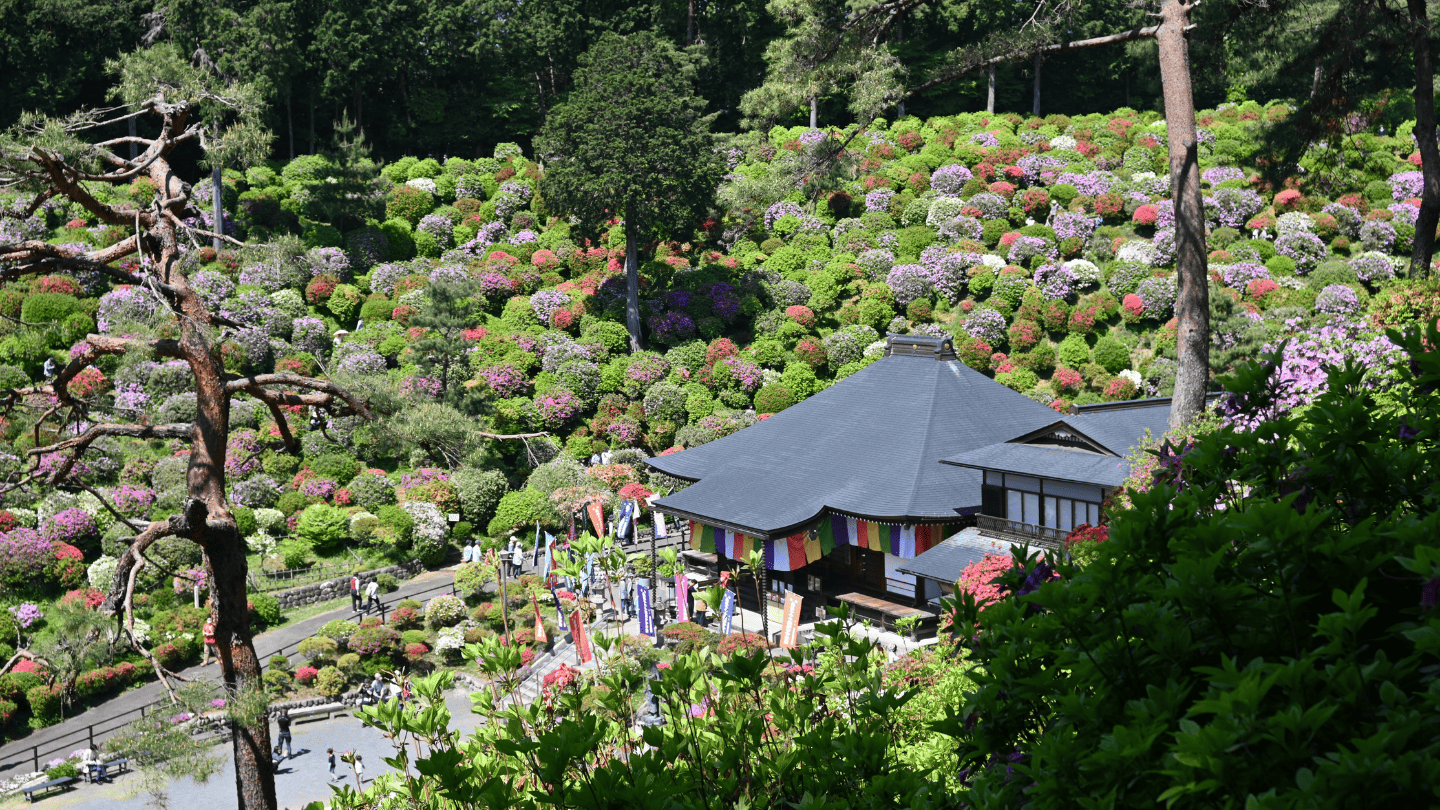
Spring in Ome isn’t just about cherry blossoms.
The brightly colored azaleas (called tsutsuji in Japanese) at Shiofune Kannon-ji Temple also beautifully herald the arrival of spring.
In this article, we will introduce the “Tsutsuji Matsuri” (Azalea Festival) at Shiofune Kannon-ji, known as one of the greatest spiritual “power spots” in Ome.
Overview of the Azalea Festival
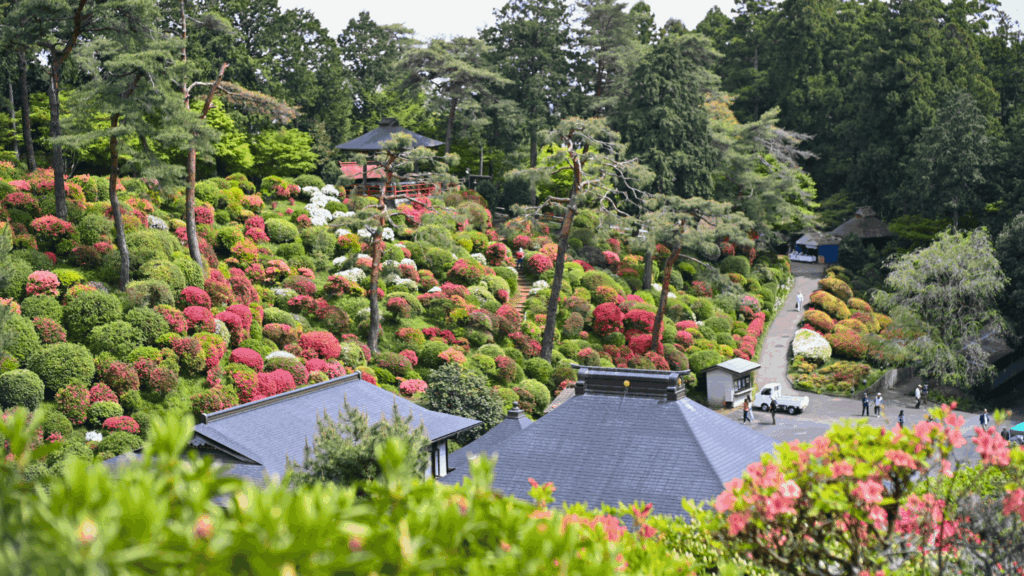
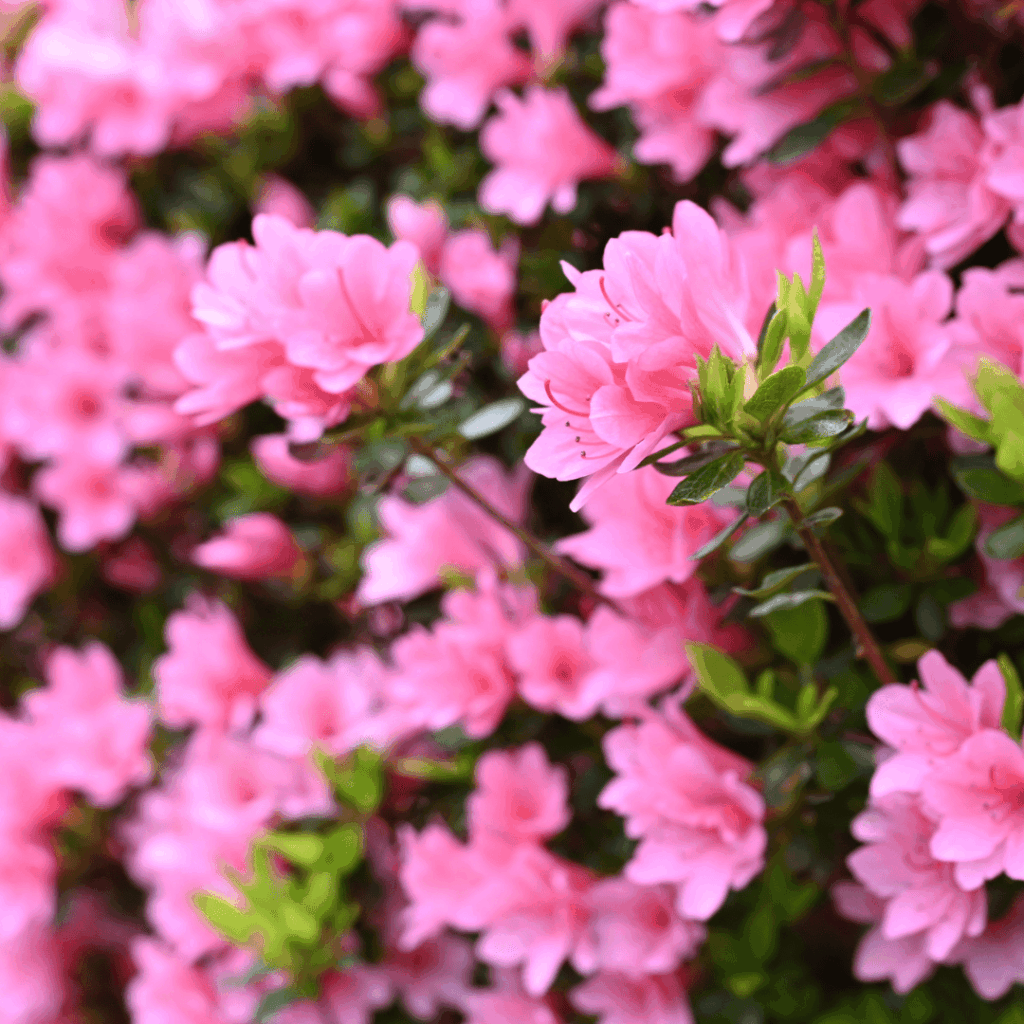
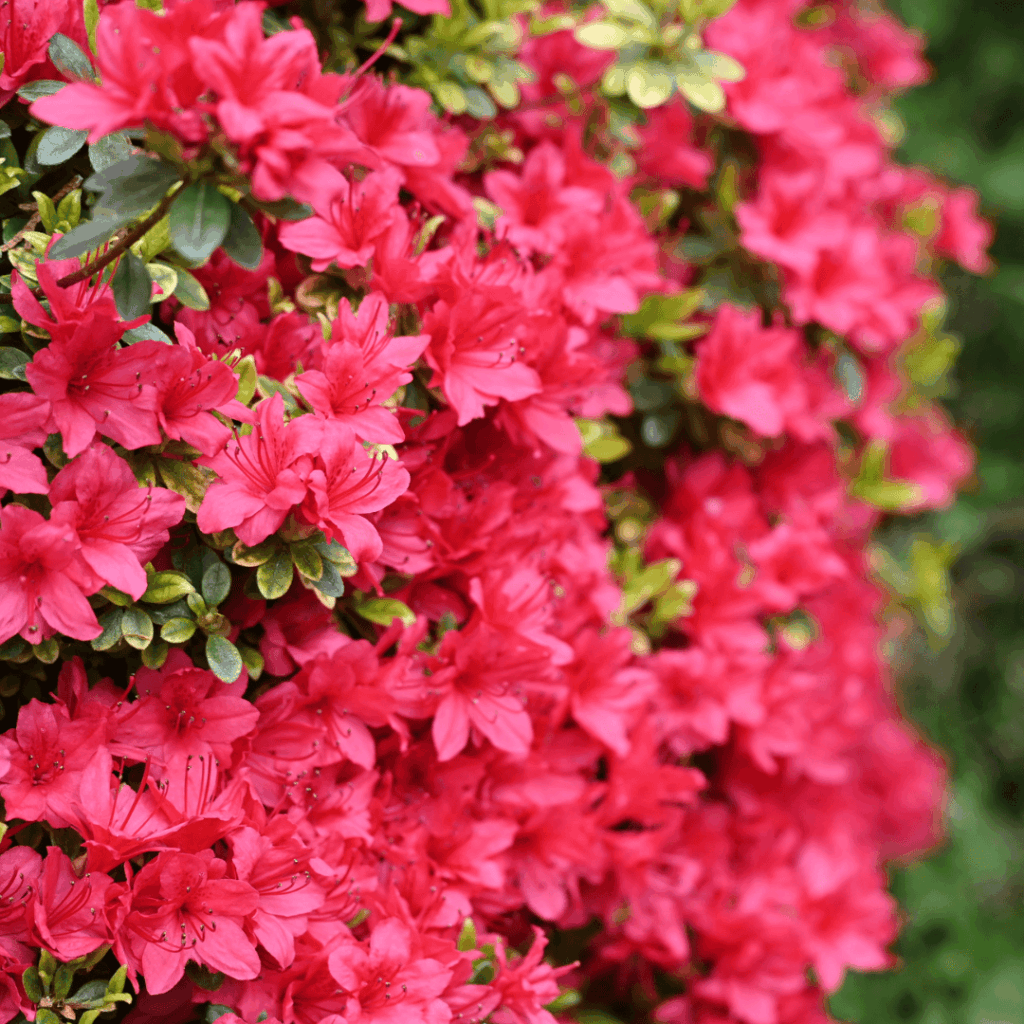
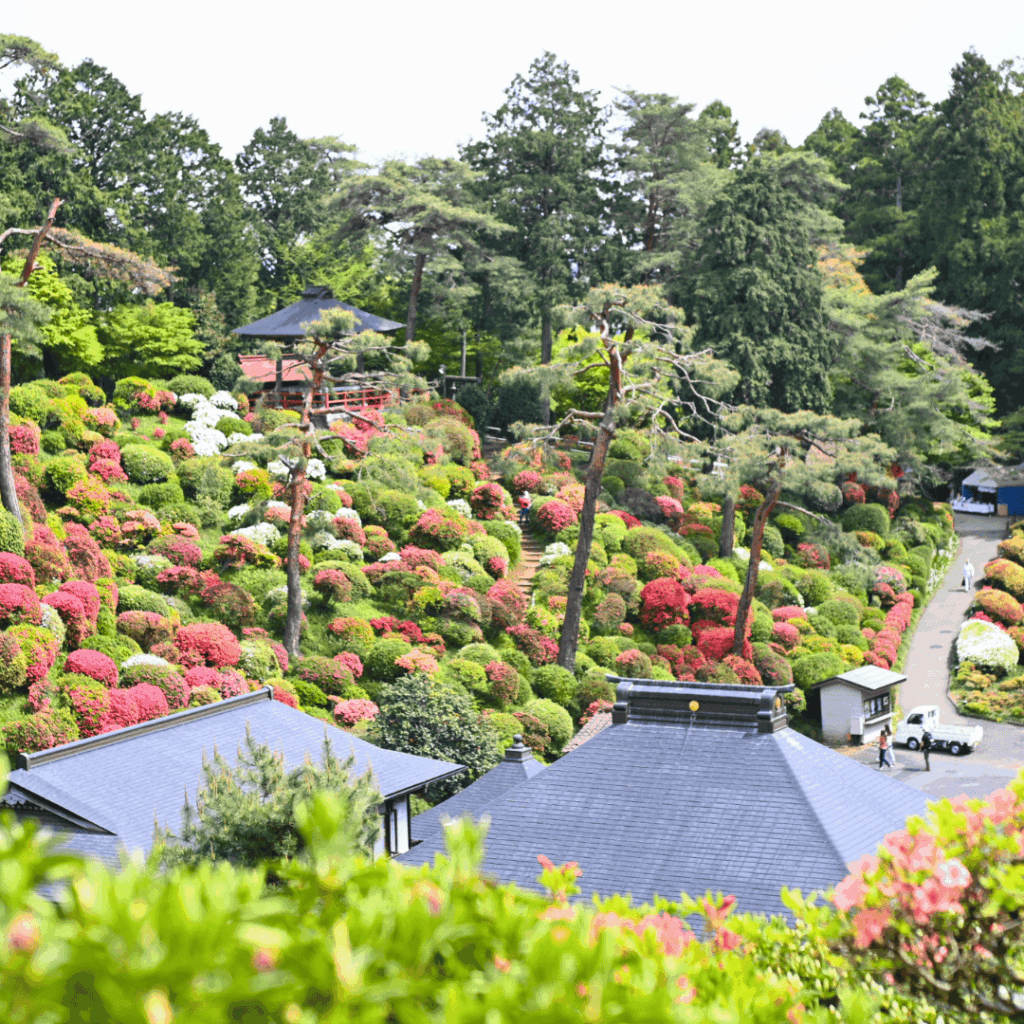
The Azalea Festival at Shiofune Kannon-ji typically runs from early April to early May. In the vast, bowl-shaped temple grounds, about 20,000 azalea bushes of 15 different varieties are planted. When in full bloom, the entire area is covered in a vibrant floral carpet.
An admission fee is required during the “Paid Period” (the peak blooming season) to help maintain and care for these beautiful flowers.
- Opening Hours (During the paid period): 8:00 AM – 5:00 PM
- Admission Fee:
- Adults (Junior high school students and older): 300 yen
- Children (Elementary school students): 100 yen
- Groups (20 or more people): 250 yen
- Seniors (75 years and older): 250 yen
- Free for visitors with a disability certificate (please present it at the entrance).
- Parking Fee (During the paid period):
- Regular cars: 700 yen
- Motorcycles: 200 yen
Note: The blooming season and the paid period vary each year. Please be sure to check the latest blooming status on the [Official Website] or [Official Facebook Page] before your visit.
Access: Train and Bus are Highly Recommended!
While parking is available (for a fee) during the festival, it gets extremely crowded every year. Driving on the narrow mountain roads around the temple can also be quite stressful. Therefore, we highly recommend using public transportation like trains and buses.
- How to get there by Train and Bus:
Take the JR Ome Line and get off at “Kabe Station”. From the North Exit, take a Nishi-Tokyo Bus or Toei Bus and get off at the “Shiofune Kannon Iriguchi” bus stop. The temple is about a 10-minute walk from there.
Special extra buses may operate during the festival period.
(For those confident in their stamina, it is also possible to hike from Kabe Station to the temple, which takes about 35-40 minutes.)
A 360-Degree Panoramic View of Azaleas
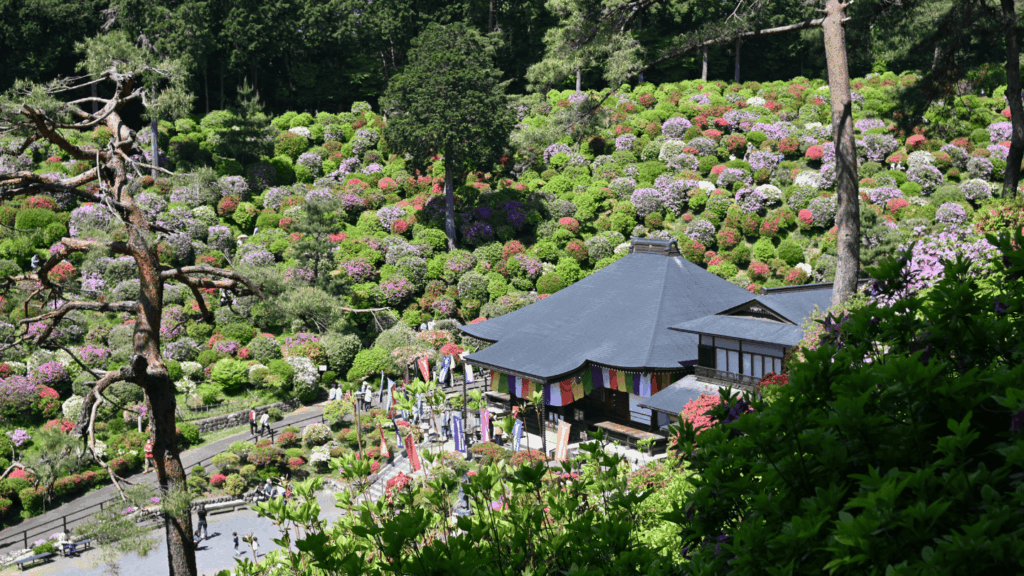
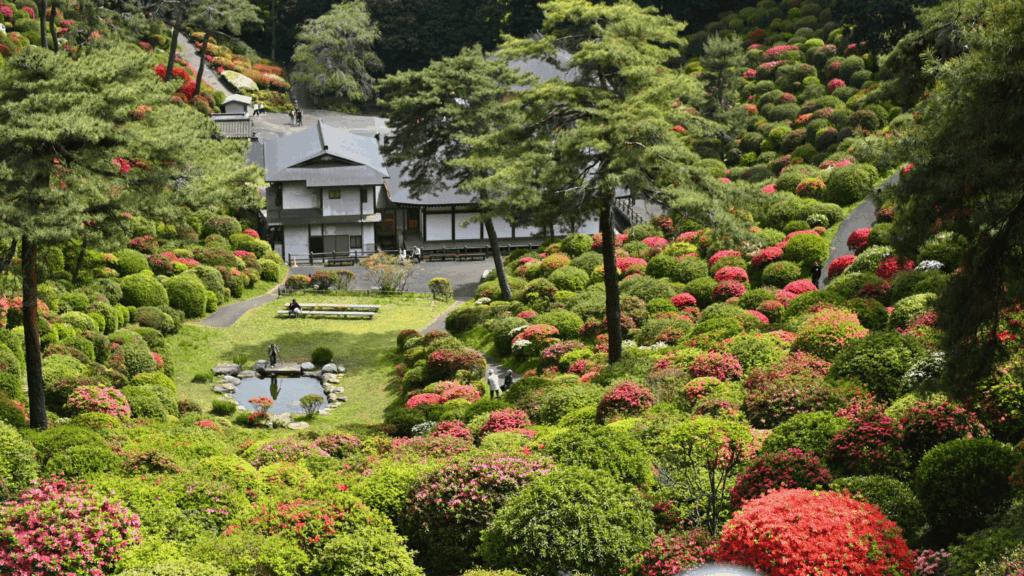
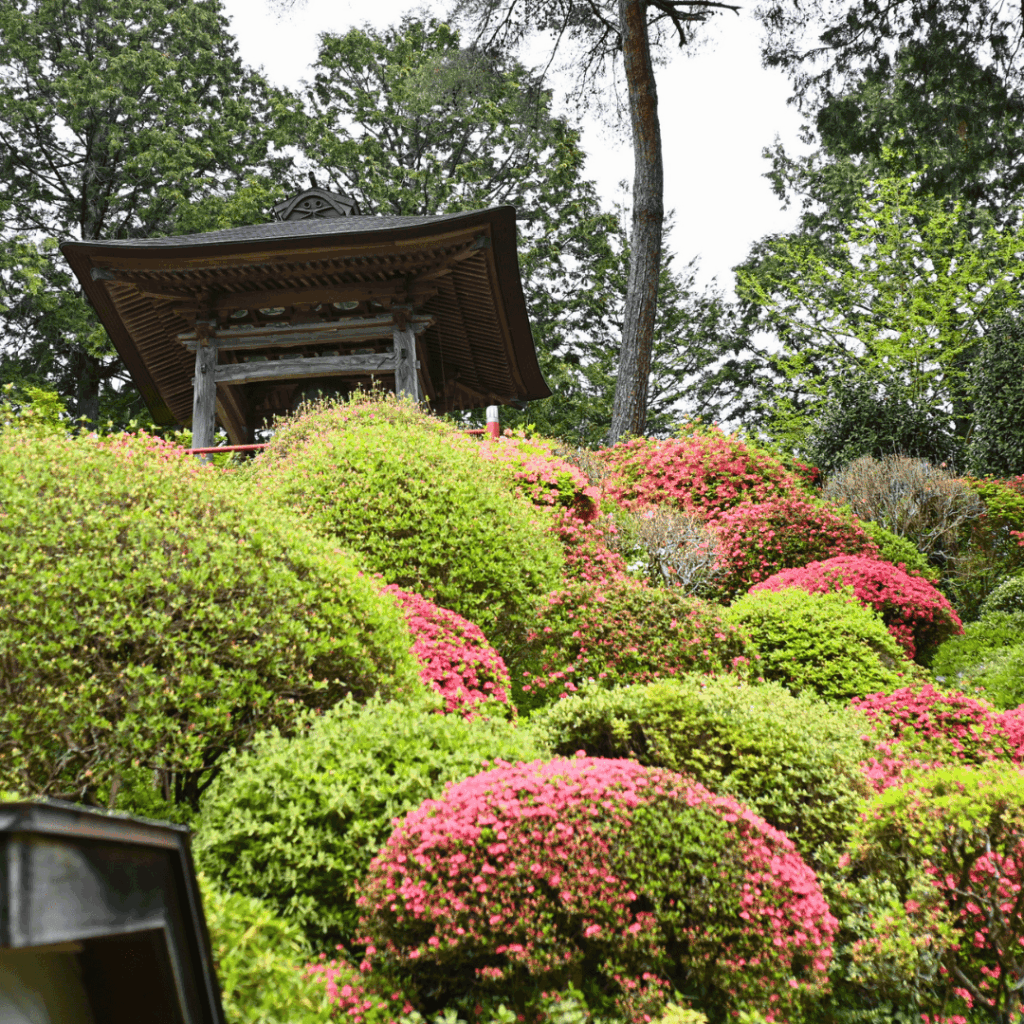
As you walk toward the main hall, a breathtaking 360-degree view of blooming azaleas unfolds before you.
The “Azalea Garden” is like a maze of colorful flowers! It is thrilling to stroll along the narrow paths, wondering where they will lead. During our visit, children were also having a great time exploring this floral labyrinth.
Caution
Many wild creatures live in the nature-rich azalea garden. You may occasionally encounter bees or snakes, so please be careful where you step and pay attention to your surroundings while walking.
The View from the Shiofune Peace Kannon Statue
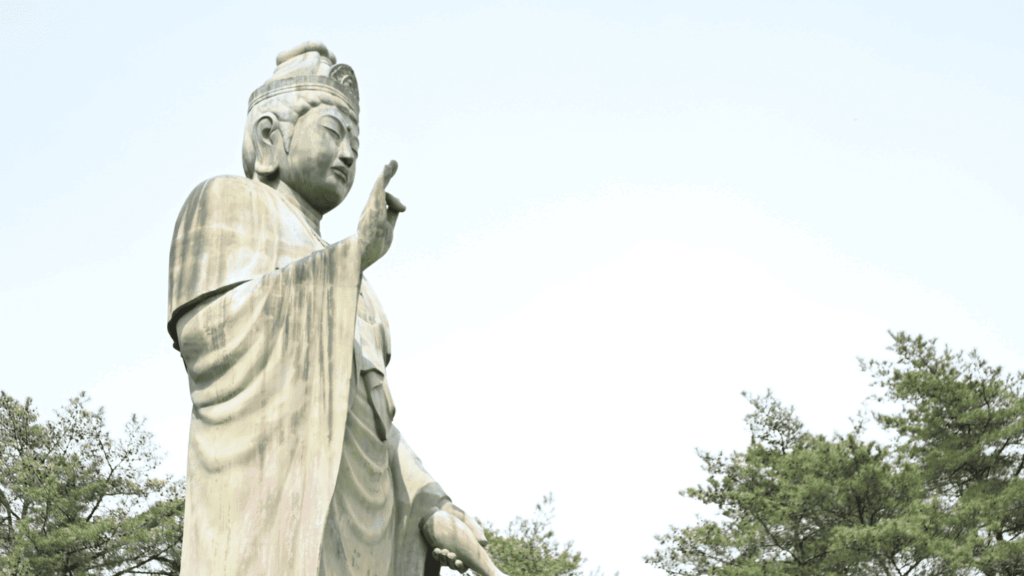
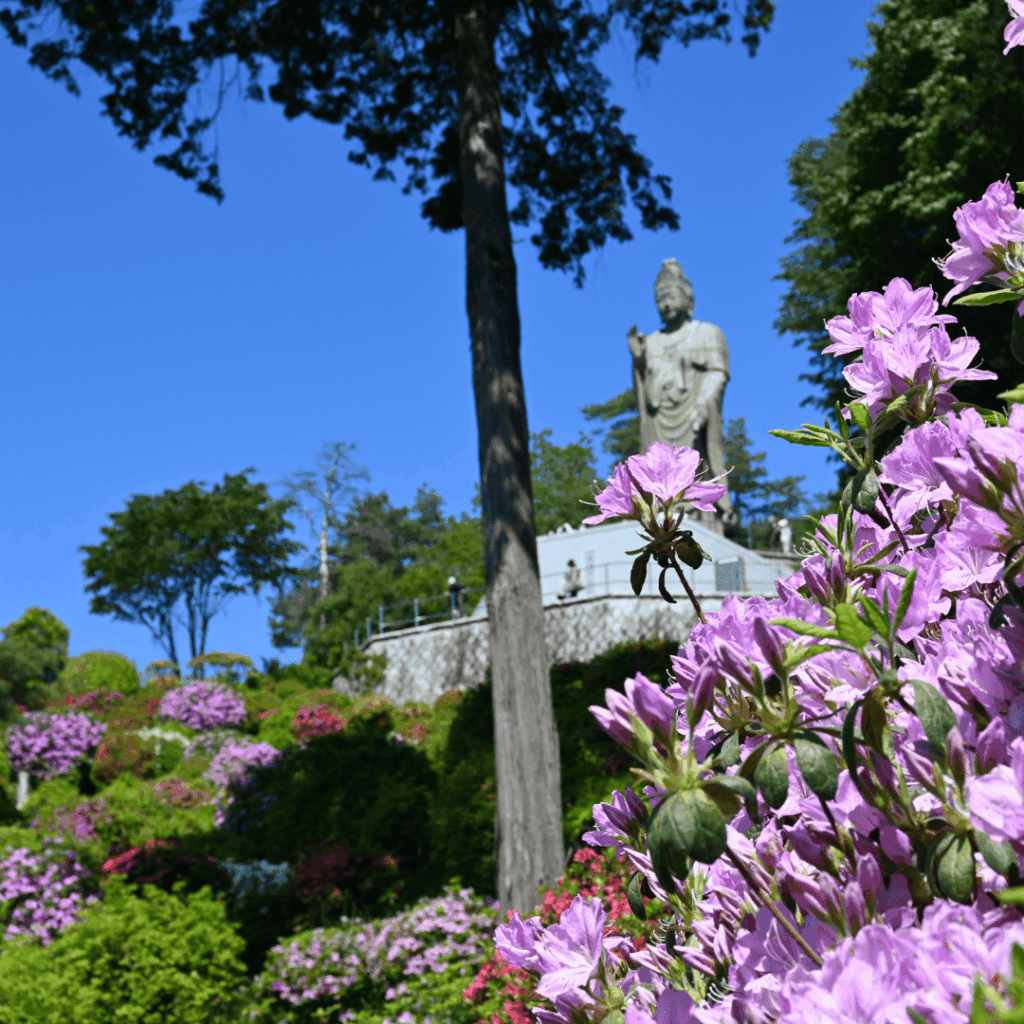
The azalea garden is situated on a gentle hill, and at its summit stands the giant “Shiofune Peace Kannon Statue”.
You can climb up right to the foot of the statue, and the view from there is simply spectacular. Looking out over the bowl-shaped valley filled with beautiful azaleas and the town in the distance will make you forget all your daily worries.
Special Events Exclusive to the Festival Season
During the Azalea Festival, the temple grounds come alive with a festive atmosphere and various special events.
- Main Events:
- April 8th: Hana Matsuri (Buddha’s Birthday)
- 4th Sunday of April: Hana Ochigo Gyoretsu (A parade of children in vibrant traditional costumes)
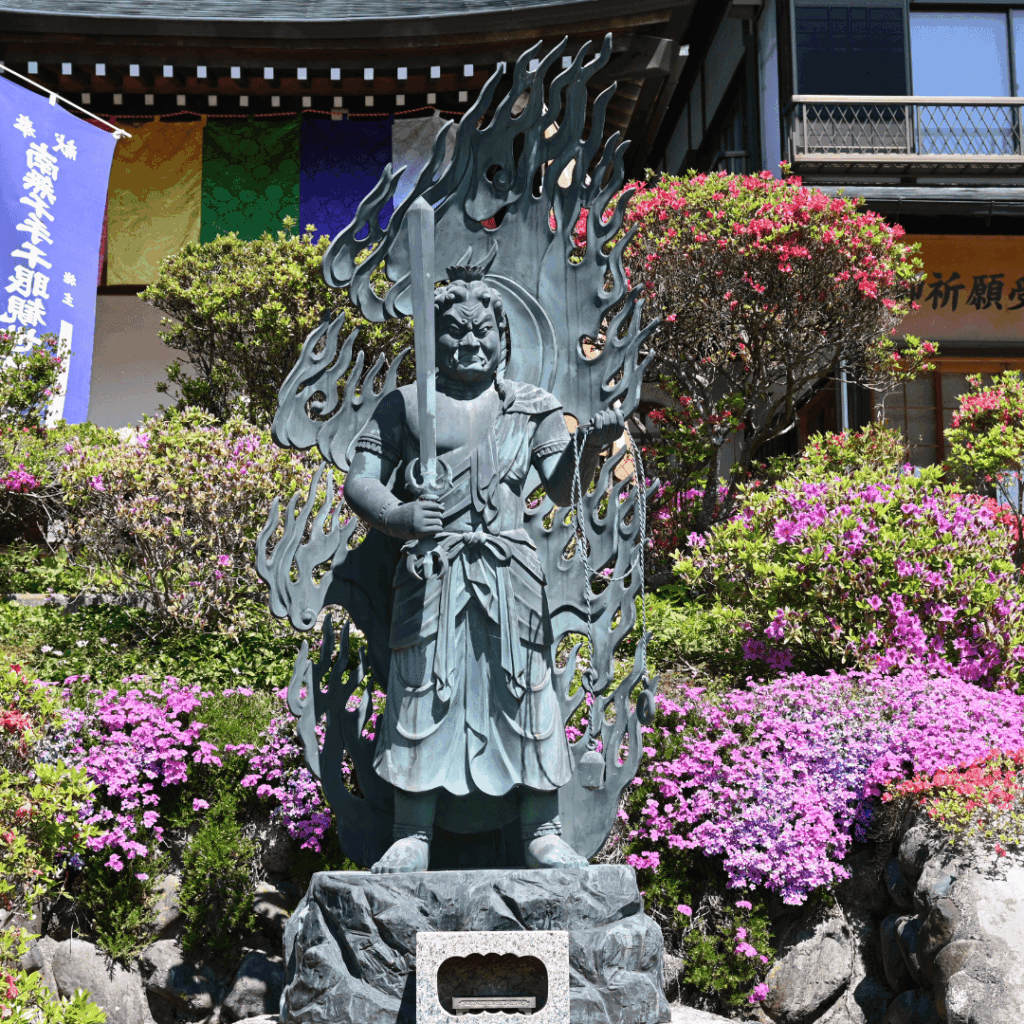
- May 3rd: Fire Walking Ceremony (A traditional ascetic practice open to the public)
- The “Azalea Performing Arts Festival,” featuring magic shows, traditional Taiko drumming, Japanese dance, and more, is also held during the period.
- Limited-Edition Goshuin (Temple Stamps):
Special Goshuin stamps that can only be obtained during this season are also available. Exquisitely designed stamps, such as the “Kirie (paper-cutting) Goshuin,” are perfect souvenirs. If you collect Goshuin, don’t miss them!
Dining: At the Temple or Around Kabe Station
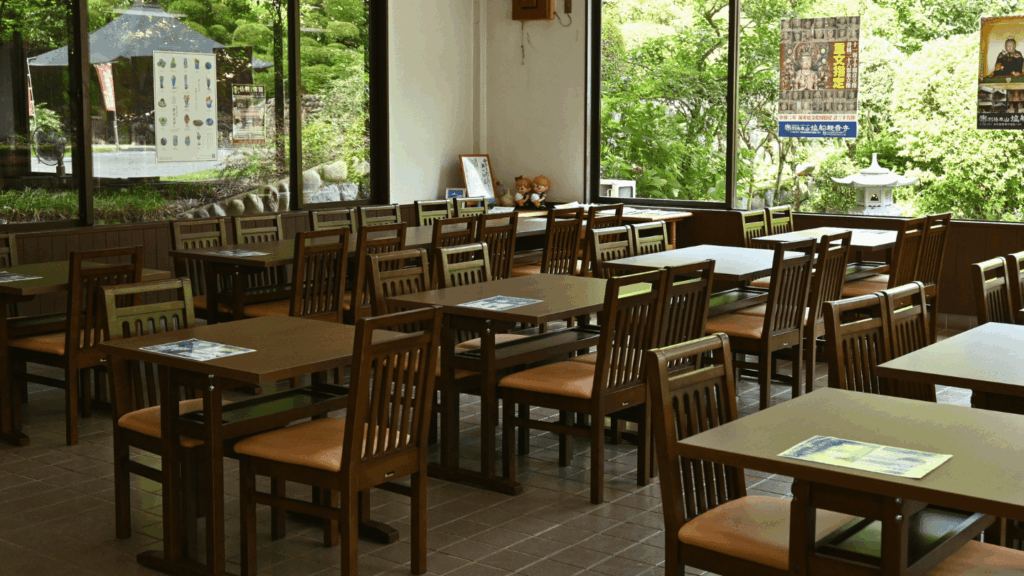
There is a kiosk and resting area on the first floor of the “Fumon-kaku” hall on the temple grounds where you can have a meal.
However, seating is limited and it is expected to be crowded during the festival. If it is full, we recommend heading back down the mountain and enjoying a relaxing meal at one of the restaurants around Kabe Station.
The History of Shiofune Kannon-ji You Should Know
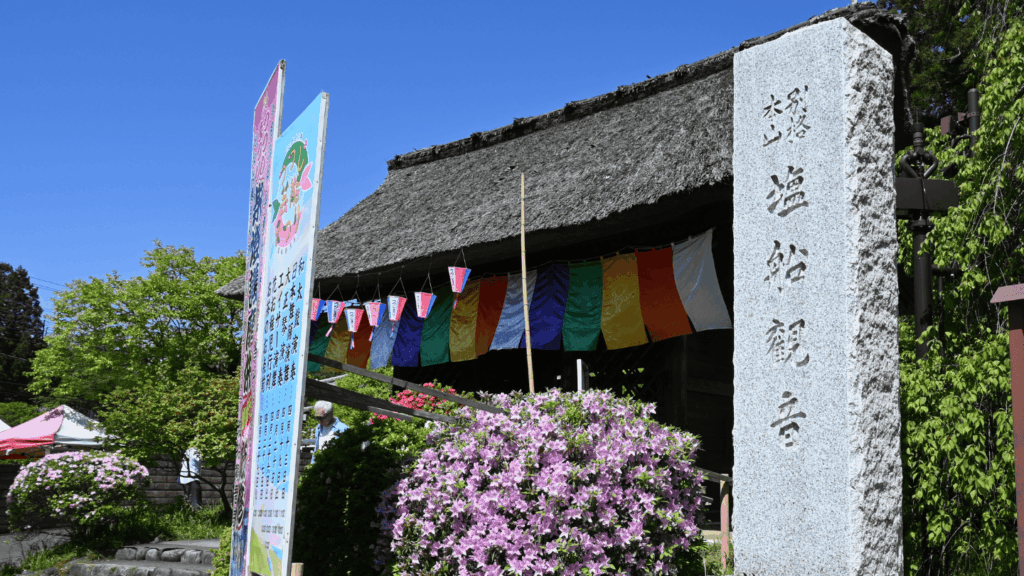
To fully appreciate this stunning scenery, it helps to know the deep history of Shiofune Kannon-ji.
- Founded on a Mermaid Legend
The temple’s origins are ancient, dating back to the Taika era (around 645-649 AD). It is said to have been founded by “Yao Bikuni,” a legendary nun who supposedly lived for 800 years after eating the flesh of a mermaid. - The Origin of the Name “Shiofune”
During the Tenpyo era (729-749 AD), the famous monk Gyoki visited this site. He noticed that the bowl-shaped topography surrounded by small hills looked like a ship. He named it “Shiofune” (Salt Ship), likening it to the “Ship of Vows” that Buddha uses to save people. The very landscape where we now enjoy the azaleas is the origin of the temple’s name! - A Treasure Trove of Cultural Assets from the Muromachi Period
In the late Muromachi period, the temple received generous patronage from the Mita clan, a powerful local family that ruled the Ome area. Most of the existing structures (the Main Hall, Amida Hall, Niomon Gate, etc.) were built during this time and are designated as National Important Cultural Properties.
If you are visiting Ome in the spring, Shiofune Kannon-ji—where deep history and magnificent nature perfectly harmonize—is an absolute must-visit. Please enjoy a wonderful time healing your soul with vibrant azaleas and historical romance!
Photo Gallery

この記事、楽しんでいただけましたか?😊
baigo.funを運営しているWebサイト制作事務所SSAITS -サイツ- です。
2023年に練馬区から青梅市に移住してきました。
この素敵な街の魅力を、Webを通して発信することで、地域に貢献できればと思っています。
もしよろしければ、記事の感想や、今後baigo.funで取り上げてほしいテーマなどを、お問い合わせフォームから教えてください📝
これからも、baigo.funをよろしくお願いいたします!